
Chasing More Growing Days in Alaska
(And Some Surprising Flower Colors)
If you grow anything in Alaska — or in any northern climate — you know the challenges.
Just when your garden really starts hitting its stride… the season is more than halfway over.
In many parts of Alaska we only get about 115 frost-free days, usually from late May through August. For flower farmers and food growers alike, that short window limits what we can grow, how much we can harvest, and how long we can supply local markets.
So naturally, farmers start asking the same question:
How do we stretch the season just a little further?
That question is exactly what inspired a new research project we’re working on here at the farm.
A New Research Project for High-Latitude Growing
We’re incredibly grateful to have received support from the Western Sustainable Agriculture Research and Education (SARE) program, which funds farmer-led research projects exploring practical solutions for agriculture.
Our project focuses on one big question:
How can we extend Alaska’s growing season in a way that is practical, energy-efficient, and profitable for growers in cold climates?
To explore this, we’re testing a hybrid season-extension model inspired by merging several existing systems.
Rather than relying on just one technique, the goal is to combine the most effective elements of different systems into something that could realistically work for growers in Zone 3/4 climates like Alaska — and potentially even colder regions.
If successful, this approach could extend production by as much as four additional months.
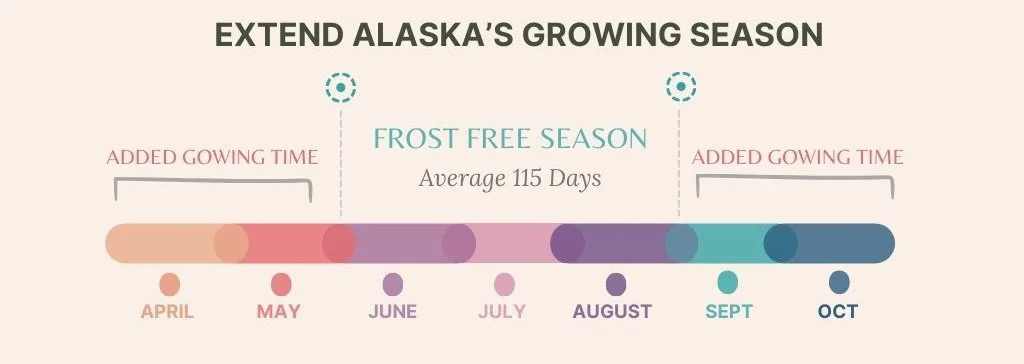
For growers, that could mean dramatically more production time — and a much stronger local supply of flowers and food.
But that’s only half of what we’re studying.
Because Alaska has another growing variable that most places don’t.
Alaska’s Long Days Do Strange Things to Flowers
Anyone who has grown plants in Alaska has probably noticed it at some point.
You plant a variety you’ve seen in catalogs… and when it blooms, it doesn’t look quite the same.
Our summer days can reach 18–22 hours of daylight, creating growing conditions that are very different from most places where plant varieties are developed.
And sometimes, that long northern light changes things.
For years we’ve noticed subtle differences in how flowers grow here — especially when it comes to color.
So part of this project is documenting something we call:
High-latitude floriculture anomalies.
In simpler terms:
Flowers grown in Alaska sometimes develop different colors, tones, or characteristics than expected.
For this project we’re documenting these changes across four types of cut flowers:
• Dahlias (tubers)
• Tulips (bulbs)
• Anemones (corms)
• Snapdragons (seed-grown)
Throughout the season we’re photographing blooms and comparing them with breeder reference images to better understand how extreme daylight conditions influence color and growth.
One Early Observation
One of the first crops we’ve started documenting closely is dahlias.
Dahlias are loved by growers for their striking colors, incredible range of varieties, and the sheer diversity across classes — from soft, romantic forms to bold, structured blooms. They’re also notoriously difficult to ship well, which makes them an especially valuable crop for local flower farms.
Under Alaska’s long daylight hours, we’ve started noticing differences compared with standard breeder images.
Some varieties appear slightly lighter, more saturated, or shifted in tone. In other cases, the changes are more dramatic — with colors presenting almost entirely differently than expected.
Some shifts are subtle. Others are hard to ignore.
We’re continuing to photograph and document these blooms so growers working in northern climates can better understand what kinds of variations to expect when growing dahlias at high latitudes.
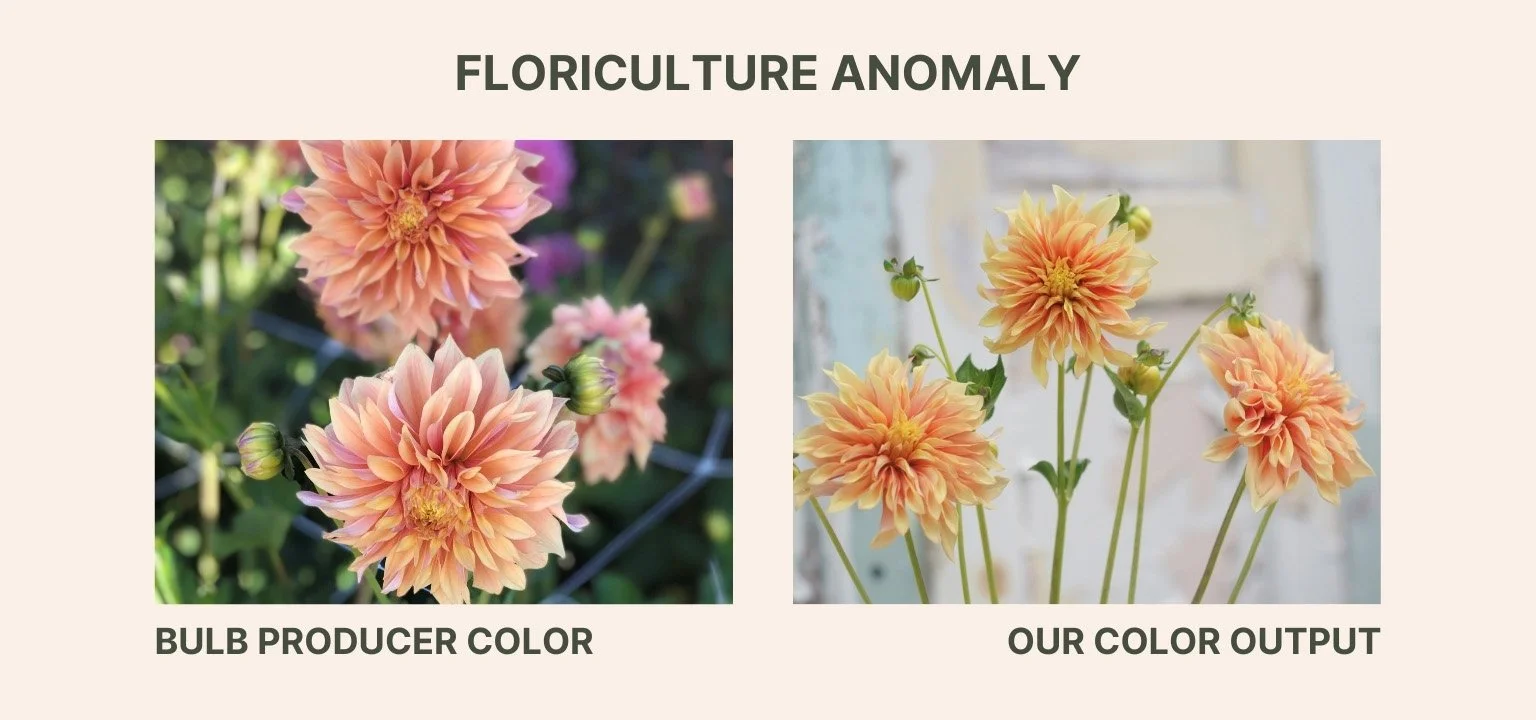
Do you see the difference in this variety?
Why This Matters for Growers
For commercial flower farms, these kinds of details matter more than you might think.
Color accuracy plays a huge role when selling to:
• florists
• designers
• wedding clients
• wholesale buyers
If a flower blooms a noticeably different shade than expected, it can affect how growers plan crops, market varieties, and communicate with customers.
By documenting these patterns, we hope to help northern growers:
• choose varieties more confidently
• anticipate bloom outcomes
• market flowers more accurately to florists and designers
What’s Next
This first season has focused on collecting observations and photographs that document these high-latitude growing effects.
Over the course of the project we’ll be sharing:
• side-by-side image comparisons
• season extension system development
• lessons learned from testing different growing methods
• resources for other cold-climate growers
If you’re also experimenting with season extension, we’d love to hear from you and compare notes.
Growing in northern climates has always required a little creativity — and a lot of curiosity.
We’re excited to keep sharing what we discover.
Stay tuned — we have a lot more to learn!
